
To view the original article on X, Click Here.
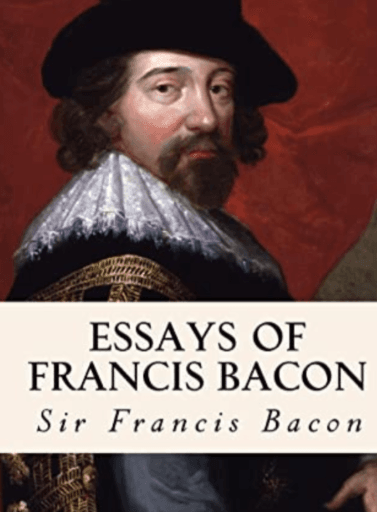
1. Francis Bacon – Essays (1597)
This is a great book that I’m not sure gets the credit it deserves.
Like most old books, this one is available on Gutenberg for free.
If you want to evaluate it briefly, it starts with “Of Truth,” the sentence “What is truth? said jesting Pilate,” — I’m not sure what all the extra stuff is beforehand.
Here is my view on “online books” vs. paperback…take it for what its worth (zero). I don’t believe that the brain processes online reading correctly, I worry that you as the reader will view these books using your Twitter Scrolly Brain and not your real brain.
Great books, especially the old ones, are meant to be consumed in paperback form with your phone off. I have just found that my retention is near-zero otherwise.
This is a short book (100 pages). It is similar to La Rochefoucauld or Baltasar Gracian or Seneca or James Allen where these short books have a far higher signal/noise ratio than anything modern.
I remember reading Bacon’s “Of Truth” and saying wtf is this. The next few essays didn’t make sense to me either. Keep going, devote 20-30 minutes to it, and eventually you’ll get it…every single sentence in there is arguably a hall-of-fame banger.
“But little do men perceive what solitude is, and how far it extendeth; for a crowd is not company, and faces are but a gallery of pictures, and talk but a tinkling cymbal, where there is no love.”
I don’t pound the table on many books…those initial top 10, I will, and this one I will. You have very little to lose, buy it, read it, and re-read it. I’ve gone through it probably ten times and am due for a re-read, I get something new every time.
2. La Rochefoucauld – Maxims (1665)
This is one of the best books ever written on human nature. I feel like I’ve referenced it in passing in tweets and videos but I cannot pound the table strongly enough on it. Very short, infinite signal/noise ratio.
3. Tolstoy – A Confession (1882)
This is a hell of a fucking book. I am not sure it’s “table-pound” territory but I will explain why I liked it so much.
This book found me at a perfect time. Late 30’s, doing a lot of deep reading on the exact authors he mentions – Schopenhauer, Socrates, Solomon, Buddha.
I would say if you are in a similar phase of life – searching for knowledge and wisdom and thinking about spirituality – it’s a must-read.
Gandhi is on the record about how much Tolstoy influenced him; pulled from an LLM “Tolstoy’s Confession is one of the most truthful books ever written. It is the record of a soul in torment honestly searching for meaning, and therefore it has permanent value for all who seek truth.”
“Gandhi consistently interpreted Confession as teaching three things:
1. The bankruptcy of worldly success: Tolstoy’s fame, wealth, and genius did not protect him from meaninglessness — a point Gandhi used repeatedly in moral education.
2. The limits of pure reason: Tolstoy’s rational inquiry leads to suicide, not truth. Gandhi saw this as confirmation that ethical life cannot be grounded in intellect alone.
3. Redemption through lived simplicity: Tolstoy’s turn toward the faith of peasants, labor, humility, and conscience aligned strongly with Gandhi’s own ascetic ethic.”
4. Cicero – Tusculan Disputations (45 BC)
Tusculan Disputations is broken down as follows:
“The first book teaches us how to contemn the terrors of death, and to look upon it as a blessing rather than an evil;
“The second, to support pain and affliction with a manly fortitude;
“The third, to appease all our complaints and uneasinesses under the accidents of life;
“The fourth, to moderate all our other passions;
“And the fifth explains the sufficiency of virtue to make men happy.”
The discussion of passions is what stayed with me…the purpose of anger and other strong emotions, whether these passions are to be embraced or avoided…Cicero lays out both sides very well. Not a long book, worth the read, I enjoyed this more than a lot of his political/statecraft treatises and speeches.
5. Spinoza – Ethics (1677)
This is the opposite of a table-pound but I’m putting it here because it belongs in my personal top 20.
“Ethics” is a straight-up philosophy book. It is very hard to read.
Use the post below as a measuring stick. If you were unable to get through THAT, don’t bother approaching anything else in this realm. The Schopenhauer book is probably as approachable as philosophy gets (still not very approachable) and I pulled out the most approachable pieces from it.
Spinoza’s book is broken into five parts:
I. Part One: On God
II. Part Two: On the Nature and Origin of the Mind
III. Part Three: On the Origin and Nature of the Affects
IV. Part Four: Of Human Bondage, or the Power of the Emotions
V. Part Five: On the Power of the Intellect, or On Human Freedom
Similar to Cicero, the third and fourth parts (on passions and emotions) are what stood out as spectacular. But the book itself is written as a series of Euclidean proofs, a geometric structure, laid out in definitions, axioms, demonstrations and scholia. This makes it absurdly challenging at first:
It’s not a long book but if you decide to undertake it, a lot of the wisdom is in the scholia. The book itself is a work of genius as far as taking a mathematical approach to philosophy and God, I’ve read it over and over and am not even sure I’m at 50% retention.
But Spinoza is known as a philosopher’s philosopher for a reason, and when you hear about a worldview or a philosophical framework, the definition would be this book or Schopenhauer’s WWR…they create a system, brick by brick, that is damn near impenetrable.
6. Books On Writing (Hemingway + King)
Switching gears entirely, two titles:
Hemingway on Writing – by Larry Phillips
On Writing – by Stephen King
These are the best books on writing I’ve read.
The Hemingway one is short – direct quotes from the man – signal/noise ratio nearly infinite.
The Stephen King one is half-memoir, half thoughts on writing. I’ve never read any of his books, for what it’s worth; it’s just obvious the moment you read his prose that this is a professional.
A distant third would be Pinker’s “Sense of Style” but these two were far more impactful.
7. Oscar Wilde – De Profundis (1905)
I have recency bias here but this book has got to be some of the best writing of all time. It’s basically one long letter written from Reading Gaol to Wilde’s lover, Lord Alfred Douglas.
I’m not sure where consensus ranks this book. “The Picture of Dorian Gray” (1890) is Wilde’s well-known work, and all those quotes and snippets of his floating around the internet are found in Dorian Gray. The writing quality is exceptional in both but De Profundis is deeply personal, comes from a place of suffering, and I cannot remember another book that has page after page of just flawless writing.
That’s why it’s here, in the sense that writing one perfect sentence is hard, writing one perfect paragraph is really hard (a series of perfect sentences), writing a perfect page is really hard (a series of perfect paragraphs) and then to produce page after page is almost impossible. But Wilde does it, and that’s why he’s one of the greats.
8. The Portable Emerson (1881)
This is a dual rec; one is short, the other is long.
The shorter version, 100 pages or so, is “Self-Reliance and Other Essays” (link here). If you’re unfamiliar with Emerson I’d start there.
If you enjoy the short version, buy “The Portable Emerson” which really isn’t all that portable, I think it’s 800 pages:
To me Emerson is the greatest American writer, in an unconventional sense. “The Greatest” tends to be reserved for authors who produced individual works or novels, the Hemingway books, Moby Dick, Faulkner. Emerson was more of a thinker so I’m not sure he even gets included in the running.
But in both the power of his prose and the power of his thought, he is unparalleled to me…sort of like the Wilde description, where you are just bowled over by page after page of perfection. The essay on self-reliance, the one on Experience, these are just the absolute peak of the craft to me.
So I think I’m sort of away from consensus here, or really not sure where I stand relative to consensus, I can only speak from the standpoint of “this man’s writing had a massive effect on me.” Similar recs would be Thoreau’s Walden + Robinson Crusoe.
9. Maimonides – Ethical Teachings (~1175 AD?)
This book was more impactful than I expected – it’s sort of a cross between theology and philosophy.
Chapters:
I. Laws Concerning Character Traits (complete)
II. Eight Chapters (complete)
III. On the Management of Health
IV. Letter to Joseph
V. Guide of the Perplexed
VII. The Days of the Messiah
Summary: “Taken as a whole, this collection presents a comprehensive and revealing overview of Maimonides’ thought regarding the relationship of revelation and reason in the sphere of ethics. Here are his teachings concerning “natural law,” secular versus religious authority, the goals of moral conduct, diseases of the soul, the application of logic to ethical matters, and the messianic era. Throughout, the great sage is concerned to reconcile the apparent divergence between biblical teachings and Greek philosophy.”
This was an interesting period in history (12th century) where Arabic thinkers were the ones that led the world, and they were responsible for reviving the great writings of antiquity.
Maimonides emerges as one of the great thinkers of the era in any history book you read. I think he was born in Spain but lived and produced most of his works from Egypt, and was revered by Muslims, Christians and Jews alike. Thomas Aquinas references his other work (Guide for the Perplexed), which mostly went over my head. But I liked “Ethical Writings” as one of the better books I’ve read, from a purely secular standpoint, on the topic of perfecting one’s character.
That’s about all I can offer on this topic, on this man, and on this historical era (Scholasticism), I’m just not that smart on it.
10. Tie: Mandeville’s “Fable of the Bees” (1714) + La Bruyère’s “Characters” (1688)
Two books + LLM summaries:
Fable of the Bees by Mandeville: “The Fable of the Bees by Bernard Mandeville is a satirical work that argues private vices, like greed and self-interest, are essential for public benefits, such as a prosperous economy and complex society. Originally a poem, it evolved into a treatise that uses a bee colony mirroring human society to show that when the bees become virtuous and honest, the hive collapses, demonstrating that vice is necessary for wealth and order. The book was highly influential in economics and philosophy, challenging traditional views on human nature and morality.”
Characters by Jean de La Bruyère: “The Characters by Jean de La Bruyère is a collection of satirical and witty character sketches of 17th-century French society, offering sharp social commentary on the aristocracy, middle class, and lower classes through vivid, often thinly veiled portraits of real people and their flaws, presented as a continuation of the ancient Greek philosopher Theophrastus’s work. The book, originally published in 1688, is a classic of French literature known for its keen observation of human nature and timeless insights into social dynamics, morality, and human psychology.”
Both are old, both are freely available online. Both had some influence on the way I think or gave me frameworks + mental models on how to think about human behavior and incentives.